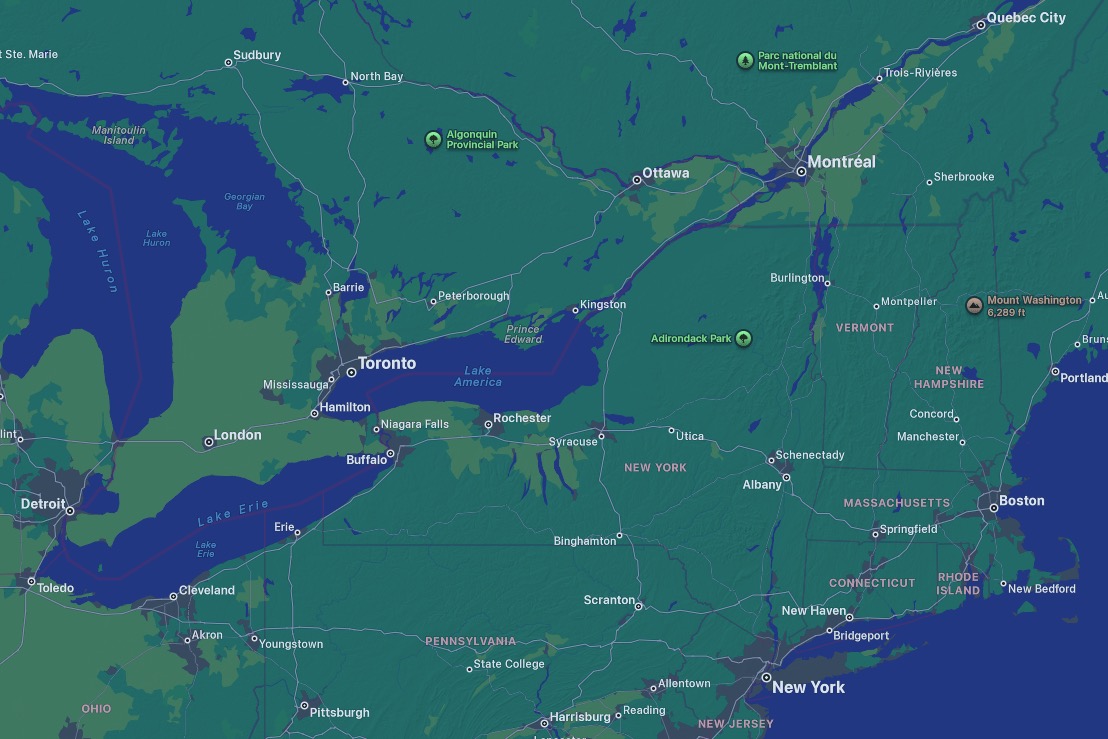
Apple Maps began showing 'Lake America' instead of 'Lake Ontario' to U.S. users this week, following Google, which made the same change over the weekend. The switch traces back to an executive order President Trump signed on August 27, giving the Interior Department 30 days to update the lake's name across federal databases.
The change is geofenced: U.S. users see 'Lake America,' Canadian users keep 'Lake Ontario,' and everyone else sees both names. Interior Secretary Doug Burgum said Trump reached out to Apple directly to request the update, according to comments reported by Reuters. Google, for its part, said in a statement that the update follows its 'long-standing policy' of reflecting official government naming sources like the Geographic Names Information System.
There's precedent here. Both companies made an identical move last year, renaming the Gulf of Mexico to the Gulf of America after a separate Trump order — Apple was slower that time too.
One company didn't budge. MapQuest announced on X that it would keep calling the lake Ontario, the name 'people are familiar with,' just as it kept 'Gulf of Mexico' on its maps last year. The payoff was immediate: MapQuest's iOS app jumped to No. 1 in the U.S. App Store's Top charts, passing ChatGPT as of September 1, and hit No. 6 overall across apps and games in Google's Play Store.
The backdrop is a deepening U.S.-Canada trade rift. Trump's three proclamations in July set 50% tariffs on Canadian goods; talks to head them off collapsed hours before an August 21 deadline, and the tariffs took effect on nearly $20 billion in Canadian exports.
Here's the playbook for founders watching this play out: MapQuest didn't spend a dollar on marketing. It made one decision — keep the name customers already know — and let the market do the rest. Apple and Google's compliance is theirs to make; nothing in Trump's order binds private companies, only federal agencies. That's the point worth sitting with. When two trillion-dollar platforms move in lockstep with Washington, the opening for a smaller, clearer competitor gets bigger, not smaller.
The math is simple: customers reward companies that pick a side and stick with it, especially when the giants look like they're taking orders. Founders who get this right don't need a rebrand strategy or a crisis team. They need the discipline to say no once, in public, and let the download numbers make the argument for them.