When you structure a deal in secret and spring it on your stakeholders, you are not being bold. You are burning trust you cannot buy back.
That is the short version of what happened at FIFA this week.
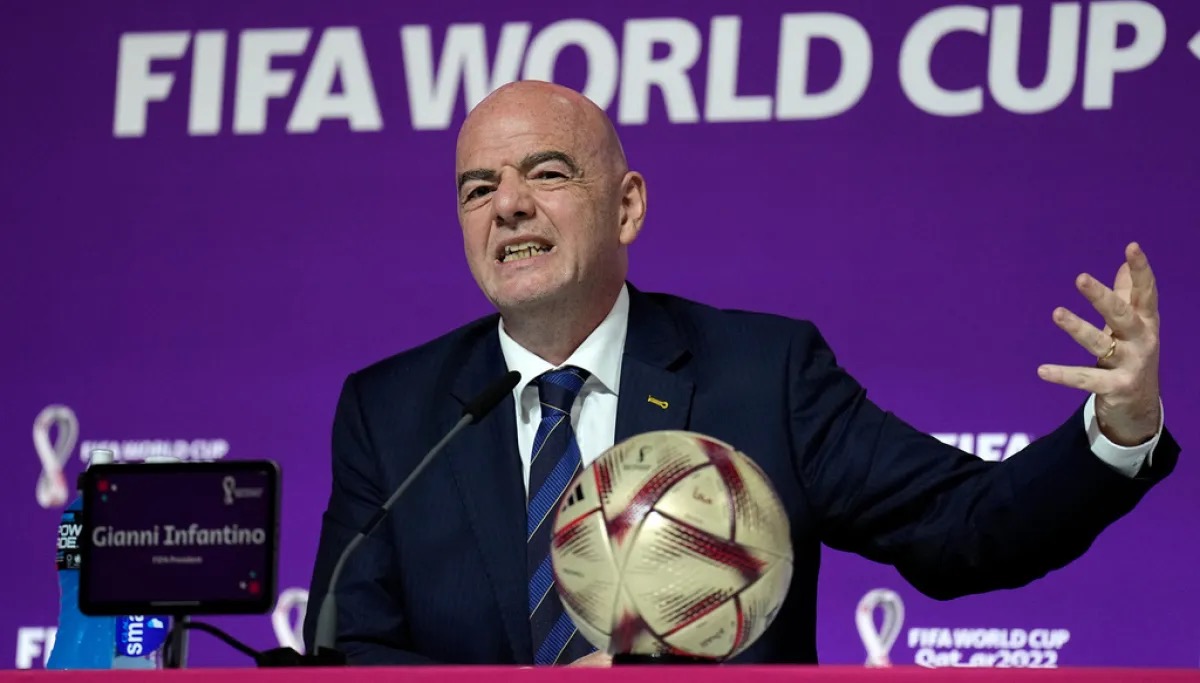
On Tuesday, FIFA President Gianni Infantino announced a plan to create a $20 billion commercial subsidiary — spinning off the World Cup and Club World Cup into a new company with 20% owned by private investors. The 'anchor investor,' according to FIFA, was a New York-based investment firm launched by Joshua Kushner, younger brother of Jared Kushner.
By Saturday morning, the plan was dead.
The mechanics of the collapse
All 55 UEFA member nations agreed Thursday to boycott the World Cup and all other FIFA competitions if the plan proceeded. CONCACAF and the Asian Football Confederation followed. Then Carlos Cordeiro, Infantino's senior adviser and a former Goldman Sachs banker who sat on the White House Task Force for the World Cup, resigned Friday, saying he could not 'stand by while FIFA considers selling a stake in the World Cup.'
Hours later, FIFA chief operating officer Kevin Lamour told the Associated Press that FIFA staff had been deceived by Infantino's 'lack of openness in planning the sale over recent months.' His verdict: 'It is the project of one person.'
Infantino withdrew the proposal Saturday, saying the plan had 'created divisions of a nature that, regardless of the level of support, are no longer in the interest of the objective set out in the first place.'
The governance failure is the story
UEFA's post-mortem was blunt: 'secret schemes on fast-track timescales, cooked up by faceless individuals and of dubious benefit to the game.' It said Infantino had 'failed to deliver' on his 2016 election promise of transparency and that FIFA's current leadership had lost the confidence of 'many other members of the football family.'
Jules Boykoff, professor of political science at Pacific University, told TIME that Infantino 'overplayed his hand,' despite FIFA's patronage network that 'brings in billions and redistributes millions to member associations around the world.'
The November 18 deadline for presidential candidates now looms. Sheikh Salman bin Ebrahim Al Khalifa of the Asian Football Confederation — whom Infantino defeated in 2016 — called the proposal 'totally unacceptable.' Infantino was re-elected unopposed in 2019 and 2023; that runway may be gone.
What this means for anyone building something
The playbook here is a cautionary one. Infantino controlled a cash machine — FIFA's commercial revenues are enormous — and used that position to engineer a deal that would have extended his personal power well past his term limit, likely at compensation far exceeding his current salary and bonus package of more than $6 million a year. He did it without buy-in from the people whose cooperation he needed most.
That is not bold leadership. That is a founder who confused control of the asset with ownership of the relationship. When your key stakeholders find out from a press release, you have already lost the vote — whether the vote is a board seat, a customer renewal, or a confederation ballot.
Opaque deals have a short shelf life. The ones that last are the ones everyone can read.