Automation just cleared the booth
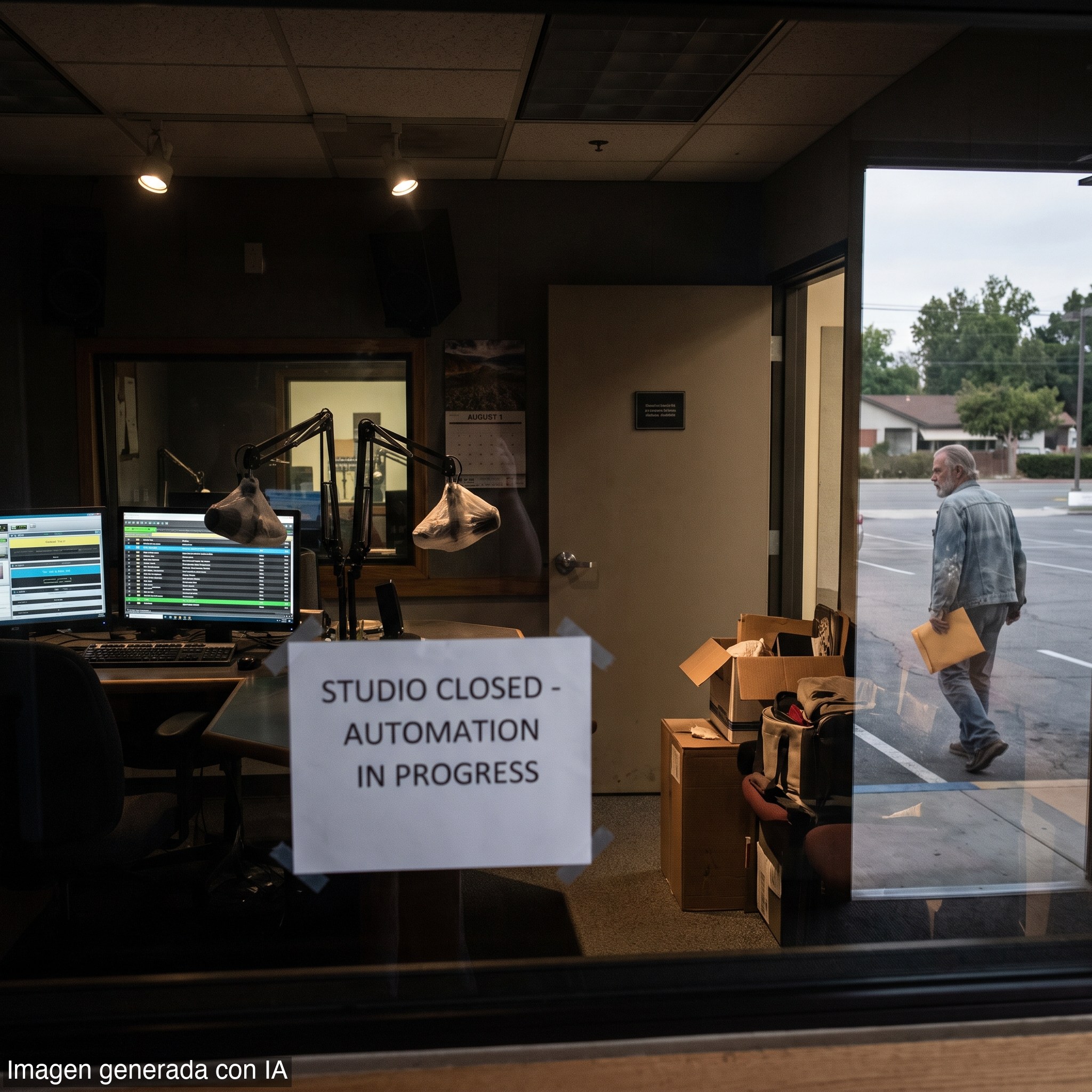
On August 1, Anaheim Broadcasting Corporation pulled the trigger on one of Southern California radio's most sweeping workforce cuts in recent memory. KCAL 96.7 — a staple of the Inland Empire dial for decades — eliminated its entire on-air staff and flipped to a fully automated, music-only format.
Chief Operating Officer Kelly Sanders framed the move as a listener-first upgrade. 'KCAL will deliver a focused, consistent listening experience with broader appeal for both our audience and advertising partners,' Sanders said in a news release, per the Orange County Register.
The math behind that pitch is straightforward: fewer interruptions, no talent payroll, and a tighter value proposition for advertisers.
The human cost
For the people on the other side of that equation, the numbers hit differently.
Veteran DJ Daryl Norsell — 42 years at KCAL, the last 36 in the afternoon slot — confirmed the cuts on social media. 'The entire KCAL air staff was let go today. Patrick in the Morning, Nikki Preston, John DeSantis, and myself,' he wrote. 'After an amazing 42 year run with the station... I can't be anything but grateful.'
DJ John DeSantis called the layoffs shocking. 'They will be moving to an automated, human-less format. To say this is shocking is an understatement,' he posted.
The cuts extended beyond the core weekday lineup to weekend and fill-in staff including Syeda Jafri, Jeremiah Paul, Rogelio Orozco, Steve 'Razz' Brazill, Mike 'Mike Z' Zara, and Kelli Cluque, among others. Jafri, who spent 20 years as a weekend and fill-in DJ, noted: 'Even radio has a shelf life.'
More than a dozen on-air roles were eliminated. The exact total headcount impact remains unclear — KCAL had not responded to press inquiries as of publication.
What founders should read here
This is not a story about radio. It is a story about the decision every founder eventually faces: at what point does automation replace a human role, and what does that trade actually cost?
Sanders' language — 'focused, consistent listening experience,' 'broader appeal for advertising partners' — is the language of a margin decision dressed up as a product decision. There is nothing wrong with that calculus. Businesses exist to survive. Automated formats cut costs, reduce scheduling complexity, and eliminate the variable risk that comes with live talent.
But the KCAL playbook also illustrates a real operational risk that growth-stage founders underestimate: when you strip the human layer from a product built on personality and trust, you may protect your margins and lose the thing customers actually paid for. A 42-year relationship with an afternoon DJ is not a line item. It is the product.
The free market will tell KCAL whether the trade was worth it. Listener retention numbers — not press releases — will be the verdict.