Here's the playbook for the most crowded cooking day of the year. Thanksgiving puts every available surface to work, and the numbers are steep: according to WalletHub data, people across the country will spend an average of 9.6 hours preparing for their guests. If your oven is packed with turkey or simply too small, you don't have to surrender the whole meal to it.
Start with the bird. Deep-frying a turkey is serious business and can end badly, so Business Insider has already covered the safest method. A slow cooker is a lower-risk alternative for smaller birds. Kendra Bailey Morris, author of 'The Southern Slow Cooker,' told Business Insider that a whole turkey likely won't fit, but a 3- or 4-pound turkey breast will. Her key point is that the slow cooker is 'inherently self-basting,' because condensation drips back onto the meat and keeps it moist. Since breast meat is lean, she suggests injecting herb butter before cooking.
The sides are where the real savings are. Instant mashed potatoes are simple and cheap, and if you want a homemade version, a slow cooker works. Sarah Olson, chef behind The Magical Slow Cooker website, told Business Insider's Erin McDowell that potatoes take a while to soften, so plan ahead. Green-bean casserole can go in the slow cooker too, or in a skillet or the microwave. Mac and cheese is covered by stovetop and slow-cooker versions from Martha Stewart, and Business Insider reported that an air-fryer candied yam recipe was 'ridiculously easy.' Sweet potatoes can be ready in 6 to 8 minutes in the microwave after you prick the skin with a fork.
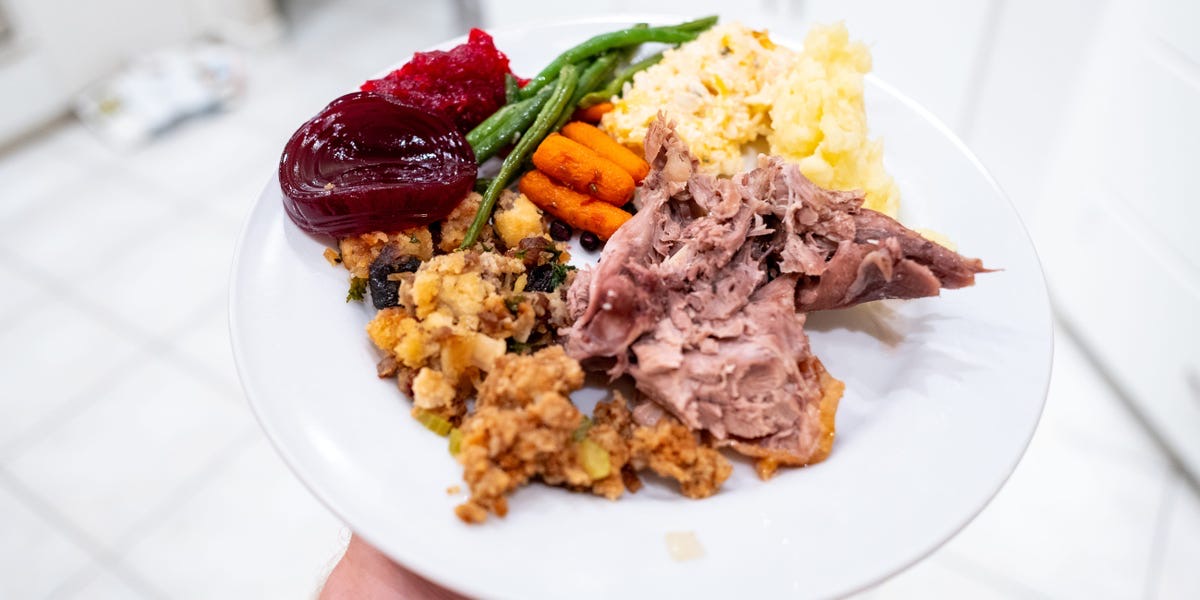
For the rest, the math is simple: buy what you can't make cheaply, and cook the rest on the burners you already have. Cranberry sauce comes straight from the can, and Business Insider's tasting pick is worth checking. Stuffing can go in the slow cooker, on the stovetop, or in an air fryer. Creamed corn simmers on the stove or slow-cooks. A dessert no-bake cheesecake from Martha Stewart removes the oven from the final course too.
Founders who plan their hosting like a production schedule move faster. Map out which dishes need heat and which need only hands and time, then assign each one a cooking surface before the day starts. The payoff is a full table with less equipment, less stress and less cash spent on takeout backup.